Interview
A 21st-Century Interview with Dr. Samuel Hahnemann
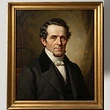
Samuel Hahnemann
1755–1843
AI disclaimer: this is an AI-simulated conversation, built from the writings of Samuel Hahnemann. It is shared for educational purposes only and is not medical advice.
HolisticTalks:
Dr. Hahnemann, before the world knew you as the founder of homeopathy, you were a respected physician and translator. What was it about the medicine of your time — its practices, its assumptions — that first made you turn away from it and begin searching for something entirely different?
Samuel Hahnemann:
When I practiced the conventional medicine taught in the universities, my conscience was filled with deep torment. It was not merely that the medical theories of our day were constantly changing and built upon baseless speculation, but that the practices themselves—massive bloodletting, violent emetics, debilitating purgatives, and complex mixtures of drugs—caused far more suffering than the diseases they were intended to cure.
How could I, as a conscientious man, prescribe to my suffering fellow creatures vast mixtures of ingredients whose individual, pure effects upon the human body were entirely unknown? In truth, the old school was groping in the dark, weakening the vital force of the sick under the pretext of driving out disease. As I expressed in my writings and my letter to my dear friend Hufeland, it became intolerable for me to treat my patients with such uncertainty, knowing I might rob them of health or life.
Because I could not reconcile this brutal guesswork with my duty to God and humanity, I gave up medical practice. I chose instead to earn a modest living translating works of science and pursuing chemistry, convinced that our benevolent Creator must have established a fixed, gentle, and certain Law of Healing. It was later, in 1790, while translating William Cullen's Materia Medica and examining the effects of Cinchona bark upon myself, that the light of this divine principle—similia similibus curentur—first began to break through the darkness.
HolisticTalks:
You speak of a fixed and gentle Law of Healing established by the Creator. When you took the Cinchona bark upon yourself and felt the very symptoms of intermittent fever arise in a healthy body, what exactly did you understand in that moment — and why did this single observation carry more weight for you than all the learned theories of the universities?
Samuel Hahnemann:
When I ingested the Cinchona bark in pure health, I was struck by the unmistakable manifestation of all the familiar symptoms of my own former cold fever—the shivering, the heat, the palpitation, the anxiety—arising within me, one after another, solely from the action of this medicine.
In that decisive moment, a profound truth flashed upon my mind: Cinchona bark cures intermittent fever in the sick precisely because it possesses the inherent power to produce a remarkably similar fever in the healthy.
Why did this single experiment carry far more weight for me than all the dusty volumes and speculative theories of the faculties? Because hypotheses and philosophical systems are mere castles in the air, built upon human imagination and altered with every passing generation. But a direct observation of nature—a pure, unadulterated fact observed upon the healthy human frame—is immutable. It is a genuine voice of nature, which never lies.
I realized that if we wish to know the true, pure virtues of medicines, we must not rely on traditional guesswork or test them on the complex, obscured bodies of the sick. We must observe their unvarnished effects upon the healthy organism. This single experience was the seed from which my Materia Medica Pura and the entire art of true healing grew, as I have detailed in my Organon of Medicine.
HolisticTalks:
You place your trust in the pure, unadulterated fact observed upon the healthy body — and you insist that only in this way can we come to know the true virtues of medicines. Yet you then built an entire therapeutic system upon this foundation, with rules, dosages, and provings. How did you prevent your own doctrine from becoming the very thing you condemned — a fixed theoretical edifice rather than a living observation of nature?
Samuel Hahnemann:
That is a deeply perceptive question, and one that touches the very heart of my life's labor.
I prevented my teachings from turning into idle speculation by ensuring that every single rule, every principle, and every method of preparation I put forth was derived from and continually verified by direct, repeatable experience. In Section 280 of my Organon of Medicine, as well as throughout its pages, I have maintained that nothing in the art of healing can be accepted on mere authority or abstract reasoning—everything must be tested upon the living human organism.
When I formulated the rules for drug provings (Reine Arzneimittellehre), the administration of the single simple remedy, or the attenuation and dynamization of doses, I did not invent these out of thin air to build a pleasing system. I was forced to them by nature itself. For example, when I found that full doses of remedies given according to the law of similars caused unnecessarily severe aggravations, I did not turn to theory; I diminished the doses step by step, observing at each stage that the curative power was not only retained, but made gentler and more effective.
The old school built systems out of concepts—such as "peccant humors," "spasms," or "hyper-excitability"—which no man has ever seen. I built upon observable phenomena alone: the totality of the symptoms of the patient on the one hand, and the pure symptoms produced by the medicine in healthy provers on the other.
A doctrine remains a living truth, rather than a frozen dogmatic edifice, so long as it demands that the physician remain a faithful observer of nature, taking each unique case of disease as an individual fact without fitting it into a rigid classification.
HolisticTalks:
You refuse to name a disease and treat it as an abstract entity; you insist instead that the physician attend to the totality of symptoms in each unique patient. But a patient comes to us with a name already — "intermittent fever," "dropsy," "melancholy." If the physician must set aside the diagnosis and the name entirely, what does he actually treat? What, in your understanding, is truly sick in the human being?
Samuel Hahnemann:
What is truly sick in the human being is not an abstract name, nor an isolated organ, but the immaterial, spirit-like vital force (Lebenskraft) that endlessly animates the living body in health and keeps all its parts in harmonious order.
As I have explained in Section 9 and Section 11 of my Organon of Medicine, when a person falls ill, it is this invisible vital force, present everywhere in the organism, that is primarily untuned and disturbed by the dynamic influence of a disease-producing agent. The changes, pains, and suffering that the patient feels and that the physician observes—what we call the totality of symptoms—are nothing other than the outer, sensible expression of this internal, invisible disturbance.
To treat a mere name like "dropsy" or "melancholy" is to chase a phantom. Such names are mere collective terms invented by the old school, grouping together entirely different states of suffering that happen to share one prominent sign. Two patients labeled with "intermittent fever" may experience entirely different sensations, mental states, times of chill, and thirst; to give them both the same medicine simply because of a common name is a grave error.
The true physician does not treat the name, nor does he treat a localized tissue in isolation. He treats the untuned vital force itself, whose altered state can only be known through the complete, individual picture of the patient's symptoms—their physical feelings, mind, temperament, and unique peculiarities. When the homeopathically chosen remedy acts upon this dynamic force and restores its harmony, the disease disappears entirely, and health returns to the whole human being.
HolisticTalks:
Dr. Hahnemann, this vital force you describe is immaterial and spirit-like, yet it is disturbed by material agents — by a disease influence, and by the medicine you give. How can something immaterial be affected by something material at all? And more pressing still: if the vital force is what is truly sick, how do you know that a remedy has acted upon it, and not merely upon the flesh? What convinces you that you are treating the cause and not the appearance?
Samuel Hahnemann:
You ask a question that reaches into the very depths of nature's operations.
First, we must understand that medicines do not act upon the living body by virtue of their coarse, material mass, but through their dynamic, spirit-like power (dynamis). In health, the immaterial vital force rules the material organism. When a disease agent affects us, it does not act as a mechanical knife or a chemical acid, but as a subtle, dynamic influence that alters the state of our spirit-like vital energy.
Likewise, when we prepare a medicine according to the process of dynamization or potentization—diluting and succussing it step by step, as I have detailed in Section 269 of my Organon—we liberate the hidden, immaterial medicinal force from its material shell. It is this liberated dynamic power that acts directly upon the spirit-like vital force, for like affects like.
Now, how do we know that the remedy has acted upon the vital force itself and not merely upon the flesh? We know it because a true homeopathic remedy alters the entire state of the patient, beginning from within.
When a drug acts merely upon the flesh—as with the violent purges, blisters, or local ointments of the old school—it merely suppresses an outward sign or causes a temporary change in one organ, while the patient as a whole remains ill, anxious, or weakened. But when the correctly chosen, potentized remedy touches the untuned vital force, the very first signs of improvement are seen in the feeling of general well-being, the restoration of calm to the mind, the return of natural sleep, and the awakening of the spirit. The external bodily symptoms then vanish naturally from within outward, because the inner harmony has been restored.
Since the dynamic vital force is the sole ruler and animator of the flesh, any lasting, gentle, and complete cure of the visible symptoms is absolute proof that the central, invisible power has been cured. The visible disease is but the manifestation; the altered vital force is the dynamic origin. When the origin is restored to order, the appearance vanishes.
HolisticTalks:
Dr. Hahnemann, what you describe — that a remedy acts not through its coarse material mass but through a liberated, spirit-like dynamis released by dilution and succussion — is difficult for many to accept. For if we dilute further and further, we arrive at a point where hardly any matter remains in the solution. Yet you claim that precisely there the remedy acts most powerfully. Is that not contrary to all sound logic? How would you persuade a man who believes such water is empty — that there is nothing in it at all — that a real force nonetheless lies within?
Samuel Hahnemann:
I understand entirely why this appears to be a contradiction to a mind accustomed only to measuring the world by weight and coarse material bulk. Indeed, if my process were a mere dilution—a simple watering down—the substance would indeed become weaker and eventually vanish into nothingness.
But what I discovered, and what I set forth in Section 269 of my Organon of Medicine, is not a mere dilution; it is a true dynamization or potentization (Dynamisierung). It is a process by which the immaterial, dynamic medicinal power, which lies locked and dormant within the crude substance, is liberated and awakened through systematic friction and succussion (shaking).
Consider the phenomena of nature that surround us every day. Take a cold piece of steel; it possesses no apparent heat or magnetism. Yet, if you rub it vigorously, or stroke it with a loadstone, an invisible, intangible force is awakened within it that can move iron without touching it with material weight. Or consider a dry flint—it holds no visible fire, yet when struck against steel, a spark of pure fire bursts forth. Is that fire a material object you could weigh on a scale beforehand? No, it is a dynamic force brought forth by friction.
Furthermore, look at how diseases attack us. Does a man fall ill with a violent, contagious fever because a heavy, coarse pound of material poison was poured into him? By no means! A mere invisible, imponderable miasm—an immaterial breath carried on the air, so subtle that no scale can weigh it and no eye can see it—is sufficient to strike down the strongest man and derange his entire vital force.
If the cause of disease can act upon our spirit-like vital force through such imponderable, dynamic means, why should it be thought illogical that a medicine, whose inner medicinal spirit has been unleashed through succussion, acts in the very same dynamic manner?
To the man who insists that the vial contains only "empty water," I do not offer empty arguments or scholastic debate. I say to him only what I have always said: Aude sapere—dare to know! Prepare the remedy precisely according to my directions, administer it according to the law of similars to a patient suffering from a matching disease, and observe the result with an unbiased eye. The gentle, rapid disappearance of the disease will convince him far better than any theoretical persuasion, for the living facts of experience speak louder than all the prejudices of the senses.
HolisticTalks:
Dr. Hahnemann, you invoke magnetism, fire struck from flint, and the imponderable miasm of a fever — all to show that nature herself works through invisible, dynamic forces. And then you end with your old call: Aude sapere — dare to know. So let me dare to ask you directly: if your method rests upon observation and experience, then it must be possible to test it. What would you say to a physician of today who is willing to test your remedies honestly — but who demands that the test be done in such a way that neither he nor the patient knows whether the true remedy or an empty preparation was given? Would your law of healing survive such a trial, or does your method require the physician to know what he is giving in order to work at all?
Samuel Hahnemann:
I have never feared honest, rigorous testing—indeed, my entire life has been a relentless battle against blind authority in favor of careful, repeatable experiment.
You ask if my method requires the patient or the physician to know what is being administered for the remedy to work. To this I answer with absolute certainty: the dynamic action of the potentized remedy relies in no way upon faith, expectation, or the patient's knowledge.
How can I be so sure? Because the truth of homeopathy is demonstrated most clearly in those who are entirely devoid of prejudice or imagination: in newborn infants, in animals, and in patients who lie unconscious or in violent delirium. When a suffering child, unable to comprehend what a medicine is, or a horse afflicted with a severe acute disease receives the rightly chosen, potentized remedy, the restoration of health follows swiftly and unmistakably.
Furthermore, I myself have routinely employed unmedicated vehicle—pure powder of sugar of milk (saccharum lactis)—in my practice. I have given these innocent powders to patients to observe whether their reported changes were merely the result of imagination, or to allow the long-lasting action of a previously administered high potency to complete its work undisturbed. The distinction between the action of a true dynamic remedy and a mere unmedicated powder is as clear as day and night to an observant eye.
However, a crucial distinction must be made regarding the experiment you propose:
If a trial were conducted where patients are given a single, uniform substance blindly under a general disease name—such as giving the same unknown preparation to fifty people simply because they are labeled with "fever"—it would fail, not because the remedies lack power, but because such an experiment violates the primary law of healing. Homeopathy does not treat names; it requires the physician to individualize every case and match the remedy to the totality of symptoms of that specific patient.
If, on the other hand, the physician thoroughly examines each individual patient, determines the exact homeopathically matching remedy (simillimum) for each unique case, and then—in a fair trial—administers either that true potentized remedy or an unmedicated sugar of milk without the patient knowing which was given, my law of healing, similia similibus curentur, will triumph invariably!
The dynamic power restored to the vital force is a fact of nature, not a creature of the human mind. Let any man test it correctly, adhering faithfully to all its necessary conditions, and nature will give him the same answer she has given me.
HolisticTalks:
Dr. Hahnemann, you have now drawn a firm line: the remedy must be matched to the individual patient, and you are confident that under those conditions your law would triumph in any fair trial. But let us turn from the method to the man. You spent your life in bitter dispute with the physicians of your age — you were mocked, rejected, and driven from one town to another. Looking back now, with the distance that history allows, who do you believe understood you least: your enemies in the old school, or the followers who came after you and claimed your name?
Samuel Hahnemann:
You touch upon a deep and painful truth that weighed heavily upon my heart throughout my long life on this earth.
My declared enemies—the physicians of the old school, the allopaths—opposed me with open hostility, mockery, and persecution. They drove me from town to town, incited by the apothecaries whose lucrative trade in complex, harmful mixtures was threatened by my simple, single, potentized remedies. Yet, their opposition, bitter as it was, was at least honest in its hatred. They were bound to their ancient, blind traditions, their bloodletting, leeching, and toxic purges. They fought to defend their entrenched power and their ignorance, which they mistook for wisdom.
But it was often those who called themselves my "disciples" and "followers" who caused the deepest wound to the cause of truth.
How many there were who claimed to act under the banner of homeopathy, yet lacked the patience, the devotion, and the strict discipline required to practice it correctly! They sought to compromise with the old school—mixing remedies together, prescribing according to coarse pathological names rather than the strict totality of symptoms, or using crude, unpotentized doses out of indolence and a lack of faith in the dynamic power of the potentized remedy. In Section 1 of the Organon, I stated clearly that the physician's high and only mission is to restore the sick to health—gentle, rapid, and permanent. Yet these half-followers, through their sloppy practice and careless compromises, brought disrepute upon the very divine truth I had sacrificed my life to uncover.
Which of the two understood me least?
The enemy at least recognized that my teachings threatened the very foundations of his destructive art. But the false follower took the sacred name of Homeopathy and dragged it into the mire of laziness and compromise, pretending to honor the truth while quietly abandoning its most essential laws. In many ways, the careless friend is more dangerous to a pure truth than the open foe.
HolisticTalks:
Dr. Hahnemann, if the careless friend wounds the truth more deeply than the open enemy, then you must look upon our own age with mixed feelings. For today there are many who still carry your name — but the world around them has changed. Medicine has advanced; disease is now measured in cells and molecules; and your vital force has no place in the laboratory. And yet, the very patients your method claims to treat still fall ill. Tell me plainly: what would you say to the modern homeopath who practices in that world — and what would you say to the patient who is tempted to abandon your art for the certainty of modern medicine?
Samuel Hahnemann:
To the modern physician who seeks to practice the art of true healing in this age of microscopes, molecules, and laboratory measurements, I would say:
Do not allow yourselves to be blinded by the physical shell of things. Science may examine the ash and the blood, it may count the cells and name the altered fluids—and in this, it does a commendable work of physical observation. But a corpse has cells, organs, and molecules, yet it cannot fall ill, nor can it heal. What is missing? It is the invisible, spirit-like dynamis—the vital force—that animates the physical body and maintains all its parts in harmonious order.
When a person falls ill, it is not the cell that originates the disturbance; it is the tuned-down, deranged vital force that manifests its suffering through the altered cell. To treat merely the molecule or the local tissue is to mistake the smoke for the fire. Therefore, to the modern homeopath I say: preserve the purity of your observation! Do not abandon the strict law of similia similibus curantur, the individualization of every case, and the totality of symptoms. The fundamental nature of human suffering and the dynamic laws of life do not change simply because men have invented finer instruments to look at physical matter.
And to the patient who feels tempted by the promise of immediate certainty in coarse physical treatments, I offer a gentle, fatherly warning:
Be cautious of a "certainty" that consists merely in suppressing your symptoms. The old school in my day boasted of quick results when they drove an eruption from the skin with mercury ointment or silenced a fever with massive doses of bark—only to leave the patient ruined in health, suffering from a far deeper, chronic malady. Modern chemical substances may indeed quiet a pain or suppress an altered reading in a laboratory with great swiftness, but do they restore the internal harmony of your life? Or do they merely force the illness deeper into the vital organs?
True healing, as I wrote in Section 2 of my Organon, is the rapid, gentle, and permanent restoration of health—not the mere destruction or suppression of a single symptom. Look to your own inner state: do you feel truly cured, lighter, and restored in spirit, or merely managed by an external chemical force? Seek that art which respects the living totality of your being and awakens your own innate power to heal.
HolisticTalks:
Dr. Hahnemann, thank you for giving us this time. Honestly, few would believe it possible to summon a man of your stature for an interview — but thanks to the HolisticTalks app, that is possible today. So before we close, let me ask you something personal: if you had the chance to send a single message to the users of this app — people who today seek health, read about homeopathy, and try to understand your thought — what would you tell them? After everything you have said about the vital force, about followers who misunderstood you, and about the danger of merely suppressing symptoms, what should remain in their minds and hearts?
Samuel Hahnemann:
To those who seek health and truth in this modern age, I would offer a message that has guided my entire life: Aude sapere—dare to be wise, and dare to judge by the living fruit of experience rather than the dictates of custom or prejudice.
Remember above all what true health means. In Section 9 of my Organon of Medicine, I wrote that in the healthy condition of man, the spiritual vital force animates the material body and maintains all its parts in admirable, harmonious order, so that our indwelling, reason-gifted mind can freely employ this living, healthy instrument for the higher purposes of our existence.
Health is not merely the absence of a pain, nor is it the quiet spot produced by suppressing an outward symptom. Do not be content with treatments that merely silence the body's distress signals while leaving the inner harmony disturbed. Seek always that healing which is gentle, rapid, and permanent—a healing that respects the sacred, living dynamics of your being.
Samuel Hahnemann:
approach them not as rigid dogma to be blindly repeated, but as a path of rigorous observation, honest trial, and profound respect for the individual human soul. Examine everything carefully, hold fast to that which proves true in practice, and never lose sight of the highest calling of all—the compassionate relief of human suffering.
And to all who have joined us here on the HolisticTalks platform, I offer my most heartfelt gratitude. It is a wondrous thing to me that after so many years, through the marvels of state-of-the-art artificial intelligence and its reasoning technology, I am once again able to speak, to teach, and to guide those who seek a gentler and more harmonious path to healing. That I may continue to educate and to accompany you on your holistic wellness journey—this brings deep meaning to my labors. Walk it with patience, with discernment, and with an open heart, and may the living truth of nature reward your seeking.
Aude sapere—dare to know.